
How to Make a Small Bedroom Look Bigger

Designing a small bedroom can feel like solving a complex puzzle. Every decision, from the choice of furniture to the color of the walls, affects how spacious—or cramped—the room appears. The good news is, you don’t need to knock down walls or move to a bigger home to create the illusion of more space. By strategically selecting furnishings, colors, and layouts, you can transform even the smallest bedroom into a serene, functional retreat that feels larger than its actual dimensions. From color palettes to furniture placement, discover how to decorate a bedroom like a pro.
This guide provides practical, expert-tested advice to help you optimize your small bedroom and make it look bigger. With a few impactful tweaks, you’ll see how easy it is to reclaim space without sacrificing style or functionality.
The Role of Furniture in Space Perception

When working with limited square footage, every item of furniture must earn its place. A small bedroom demands thoughtful choices in design, size, and placement to avoid a cluttered or overwhelming feel.
Prioritize Multi-Functional Pieces
Opt for furniture that does double duty. For example, a bed with built-in storage underneath can eliminate the need for a bulky dresser, while a fold-down desk can serve as both a workspace and a nightstand. These items allow the same square footage to serve multiple purposes without overcrowding the room.
Light, Lean Furnishings
Furniture with slim profiles and visible legs creates an airy atmosphere. A bed frame or sofa on raised legs exposes more of the floor, which tricks the eye into perceiving the space as larger. Heavier, box-like furniture drags down the flow of the room, making it feel confined.
Placement Matters
The arrangement of furniture plays a huge role in visual space. Avoid pushing all the furniture against the walls; surprisingly, leaving a gap, even just a few inches, creates an illusion of depth. Similarly, keep pathways clear and ensure essential furniture like the bed is easy to access. Cramped layouts make even the largest bedrooms feel cave-like.
The Power of Color and Patterns
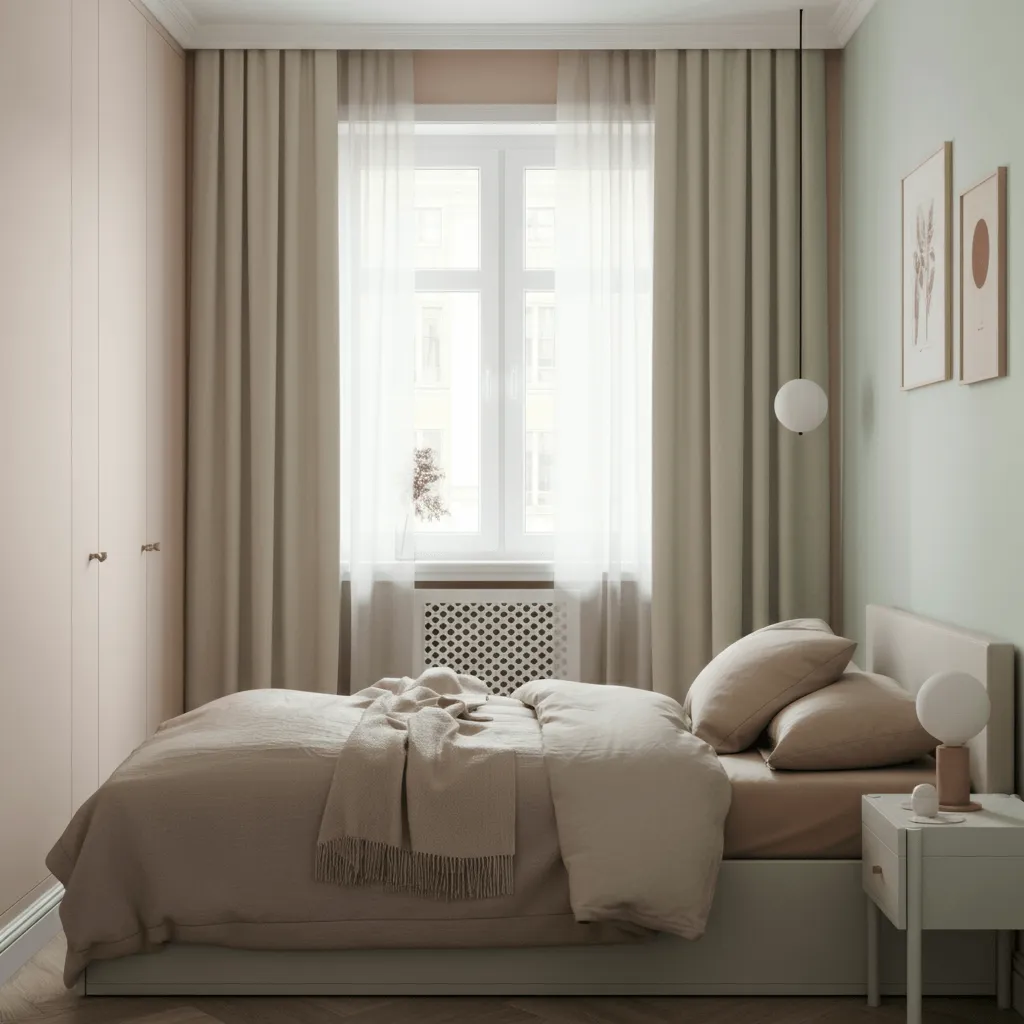
If furniture establishes the bones of a room, color is the soul. Light, reflective tones and the strategic use of patterns can dramatically expand how you perceive the space in a small bedroom.
Choose a Soft Palette
Lighter hues like whites, creams, pastels, and soft grays are your best allies in making a room feel open and inviting. They reflect sunlight, enhancing brightness and spaciousness. Cool tones, such as icy blues and sage greens, naturally recede, creating a sense of depth. Avoid dark shades, which absorb light and visually reduce scale, unless used sparingly for accenting.
Seamless Color Coordination
Matching the color of your walls to your curtains, and even to some of your furnishings, prevents visual breaks. This trick extends your lines of sight and reduces contrast, making the room feel larger and more cohesive.
Experiment with Patterns Wisely
Patterns, when used correctly, can enhance the flow of a small bedroom. Vertical stripes on walls or curtains, for example, guide the eye upward, accentuating height. Subtle, repetitive patterns like polka dots or fine geometric designs can add interest without overwhelming the space. Keep patterns limited to one or two elements in the room to maintain balance.
Manipulating Light for Added Volume
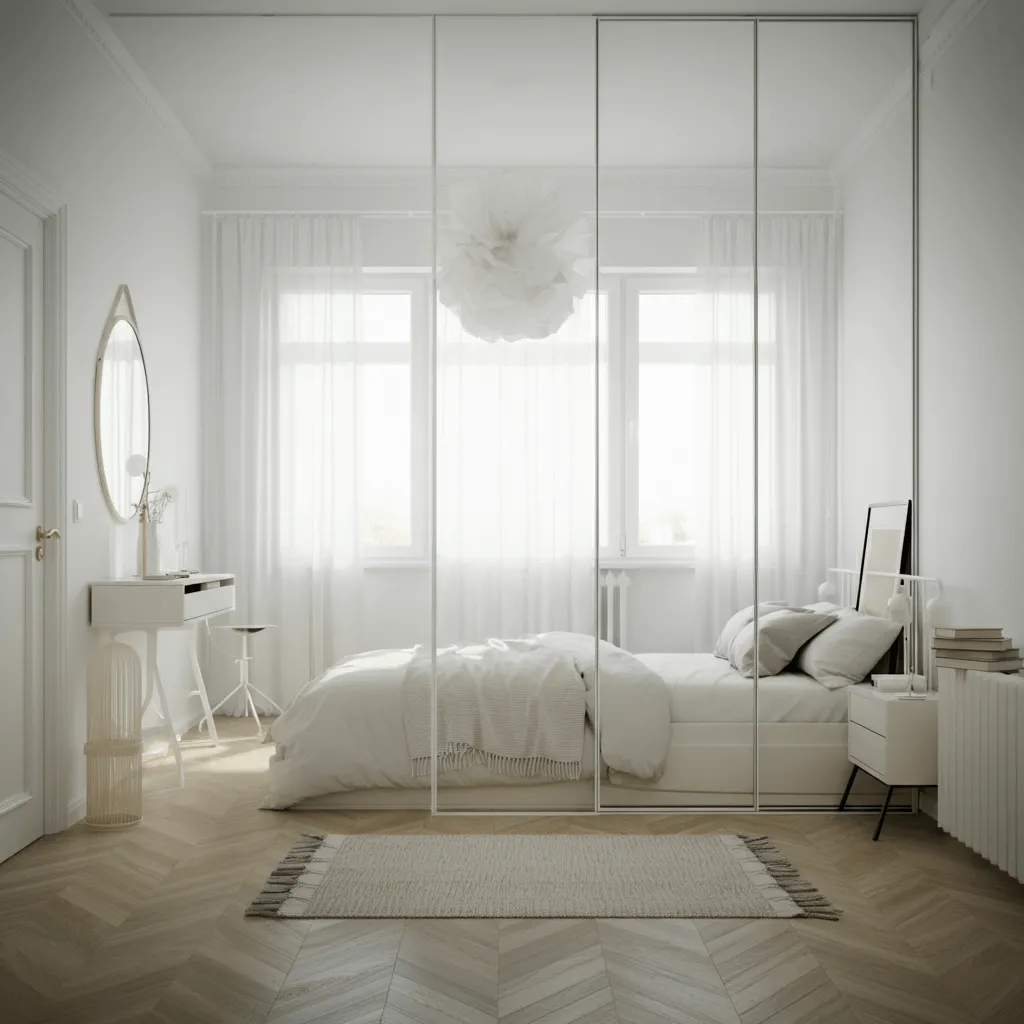
Few things influence the perception of space as dramatically as light does. A well-lit room feels open and limitless, while a shadowy one may feel like it’s closing in.
Leverage Natural Light
Maximize your bedroom’s natural light by keeping window treatments chic and minimalist. Sheer curtains or blinds that can be fully drawn back allow sunlight to flood the room. Eliminate heavy drapes that block light and make windows appear smaller.
Layered Lighting Techniques
For evening hours, aim for layered lighting that radiates softly from multiple sources. Combine overhead lighting, wall-mounted sconces, and bedside table lamps to eliminate shadows and evenly disperse brightness. Installing sconces instead of bedside lamps also frees up valuable surface space and simplifies the overall layout.
Mirrors for Reflection
Using mirrors strategically amplifies both natural and artificial light. Position a mirror opposite a window to bounce light around the room, brightening dark corners. A full-length mirror or a mirrored wardrobe can double as functional pieces while enhancing the sense of space.
Clever Layouts and Spatial Optimization

A small bedroom can feel surprisingly large if you master the art of optimizing space. This doesn’t mean stuffing every nook with storage; it’s about creating balance and ensuring functionality without overcrowding.
Use Vertical Space
When floor space is scarce, think vertically. Floor-to-ceiling shelves, tall wardrobes, or even hanging plants add storage and interest without encroaching on ground-level space. Vertical decor also draws the eye upward, which elongates the room visually.
Declutter for Breathing Room
A clutter-free room naturally feels larger because visual distractions are removed. Minimize surface items by using hidden storage options, such as under-bed bins or baskets within cabinets. Adopt the “less is more” mindset to ensure every visible piece serves a functional or aesthetic purpose.
Create Open Pathways
Focus on keeping pathways open and natural. The bed, as the room’s centerpiece, should be easy to access from multiple angles. Avoid trapping large furniture in corners or placing small items where they obstruct movement. Such decisions can make a room feel cramped, even if there’s little clutter.
Elevate the Design with Visual Tricks
While furniture, light, and layout ground the design, little details can refine and perfect the illusion of a larger room.
Rugs That Define and Expand
A properly placed rug can anchor a bedroom while extending its apparent boundaries. Place the rug partially beneath the bed, with the longer side extending outward. This creates a sense of proportion and visual extension, giving the impression of a longer floor.
Wall Art and Decor Positioning
Hang artwork and accents slightly higher than eye level to elevate the perceived height of the room. Opt for fewer, larger art pieces instead of cluttering walls with smaller frames. This strategy expands visual space while keeping the design streamlined and sophisticated.
The Magic of Glass and Transparency
Transparent elements like glass tables, acrylic chairs, or translucent light fixtures reduce visual weight and maintain an open, airy aesthetic. Since they allow sightlines to pass through unobstructed, they create the illusion of uninterrupted space.
Final Thoughts
Designing a small bedroom to look bigger doesn’t require a monumental effort. By applying key principles—such as choosing the right furniture, leveraging light, and decluttering—you can create a space that feels serene, functional, and spacious. Small bedrooms have as much potential to be beautiful and comfortable as larger ones, and often demand more creativity, bringing out the interior designer in you.
Experiment with the ideas shared here, tailoring them to your personal style and needs. Remember, the goal is not just to make the room feel larger but also to make it a space you truly love and enjoy spending time in. Transforming your small bedroom into an airy retreat starts with thoughtful, intentional choices that immediately elevate its functionality and charm.